Whlicks Narrow Walker review buyers usually want one thing: a walker that fits through real-world spaces without feeling flimsy.
This one is built around that problem, with a narrow adjustable frame, a folding design, and a higher stated weight capacity than many basic walkers.
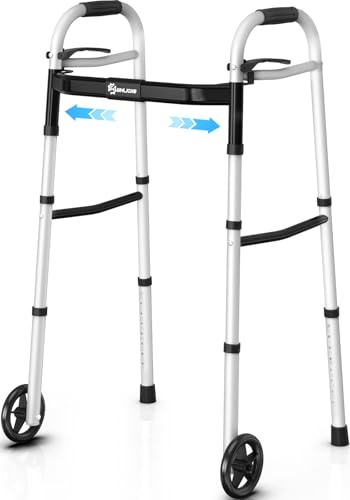
Narrow Walker Review Summary
The Whlicks Narrow Walker for Seniors makes the most sense for people who need a compact, adjustable walking aid rather than a bulky standard frame.
Based on the listing evidence, it is aimed at users navigating hallways, bathroom doors, small SUVs, and travel situations where width and portability matter as much as stability.
Its strongest appeal is the combination of a 22.4-inch to 26.4-inch adjustable width, a 30.3-inch to 37.4-inch height range, and a 350 lb capacity.
That mix suggests a walker designed to fit more bodies and more homes than a fixed-size model.
The lightweight 6.6 lb build also matters if the user needs to lift, fold, store, or transport it often.
This is not the kind of product to buy if you want a heavy, clinical-feeling rehab walker with lots of extras.
It is better understood as a practical everyday mobility tool for tight spaces, travel, and home use, especially when space constraints are part of the buying decision.
Review Scorecard
| Category | Score | Buyer-focused rationale |
|---|---|---|
| Space fit | 9/10 | Adjustable narrow width is the clearest advantage for tight hallways and doorways. |
| Portability | 8/10 | The 6.6 lb weight and folding design support travel and storage. |
| Stability | 8/10 | Thickened aluminum tubes and a 350 lb stated capacity point to a sturdier frame. |
| Adjustability | 9/10 | Both width and height adjust, which improves fit across different users and homes. |
| Indoor use | 8/10 | 5-inch wheels and hand grips are positioned for smooth everyday movement. |
| Outdoor versatility | 6/10 | The listing supports outdoor use, but this still reads as an indoor-first walker. |
| Value fit | 8/10 | Strong feature mix for buyers who need narrow clearance without giving up support. |
Key Features and Specifications of Narrow Walker
The most important spec is the adjustable width range of 22.4 inches to 26.4 inches.
The listing also notes that the walker needs at least 22.5 inches of space at the slim-fit setting, which is useful because it tells buyers this is narrow, but not magic.
If a home has especially tight doorways, that measurement should be checked before purchase.
The height range is 30.3 inches to 37.4 inches, which the listing says can suit users from 4’7″ to 6’3″.
That is a broad span and suggests the product is trying to serve a wide range of users, including shorter seniors who often struggle with standard walker geometry.
The frame uses 1.25 mm thickened aluminum tubes, and the brand says that is 25% thicker than standard models.
Whether or not a buyer cares about that exact comparison, the practical takeaway is simple: this is being positioned as a more robust aluminum walker rather than the lightest possible frame.
Other useful listing details:
- Weight: 6.6 lb
- Capacity: 350 lb
- Wheels: 5-inch PVC front wheels
- Grips: odor-free, non-slip hand grips
- Folding design: intended for compact storage and transport
- Use cases: home movement, travel, small vehicles, narrow spaces
- Support: 3-year main frame warranty and free replacement accessories within 1 year
The wheel setup matters because this is not a plain picker-up-and-set-down walker.
The 5-inch front wheels point toward easier rolling across everyday surfaces, which is helpful for users who want a smoother indoor experience and less stop-start movement.
The support policy is also part of the product story.
A 3-year frame warranty and accessory replacement coverage within 1 year are useful signals for a mobility aid, where ownership confidence matters as much as first impressions.
Pros and Cons of Narrow Walker
Pros
- Very space-conscious design for narrow homes, doorways, and tighter circulation paths.
- Adjustable width and height make it more adaptable than fixed-size walkers.
- Lightweight at 6.6 lb for folding, moving, and storage.
- 350 lb stated capacity gives it a more serious support profile than many basic walkers.
- 5-inch front wheels should help with smoother rolling indoors and in everyday settings.
- Warranty coverage is stronger than what many buyers expect from budget mobility aids.
Cons
- The narrow fit is an advantage only if the buyer measures carefully first.
- It sounds best suited to everyday mobility, not to specialized rehab needs.
- The listing gives good dimensions, but not a lot of detail about accessories or premium comfort features.
- Buyers who want a heavier, more planted medical walker may prefer a different style.
For most shoppers, the main tradeoff is simple: this walker looks optimized for fit and maneuverability, not for bulk, padding, or feature overload.
That is not a weakness if the buyer actually needs a walker that can work in a constrained home.
Who Should Buy Narrow Walker?
This product suits seniors, post-surgery users, and caregivers looking for a narrow walker for tight spaces.
It is especially relevant for homes with smaller doorways, narrow hallways, or rooms where a standard walker feels awkward.
It also makes sense for buyers who need a foldable option for car trunks, bus trips, or air travel.
It also fits users who want adjustability without jumping to a heavier rollator-style frame.
The listed height and width ranges suggest a better chance of getting a usable fit for different body types, which is often the difference between a walker that gets used daily and one that sits in the corner.
Who should skip it?
Buyers who need a walker mainly for outdoor terrain, those who want a seat, basket, or other rollator-style conveniences, and anyone whose main concern is maximum frame mass rather than portability.
It is also not the right call if your doorway measurements do not leave enough room for the slim setting.
Fit and Mobility Notes for Narrow Walker
Measuring the Home First
The listing gives unusually helpful measurements, and buyers should use them.
The narrow setting still requires at least 22.5 inches of space, so this is a case where taking a tape measure to doorways, bathroom entries, and hallway bottlenecks can prevent a bad purchase.
Folding and Storage Behavior
The 6.6 lb weight and folding design suggest easy handling for caregivers and users who need to store the walker out of the way.
That matters in apartments, multi-use rooms, and travel situations where a walker cannot stay deployed all day.
Wheel and Grip Experience
The 5-inch PVC front wheels and non-slip grips are not flashy features, but they are the ones that shape day-to-day use.
They should help make the walker feel more manageable over common indoor surfaces while keeping the hand contact point simple and safe-feeling.
Support and Confidence
The stated 3-year main frame warranty and 1-year accessory replacement coverage make the product feel more thought-through than a bare minimum mobility aid.
That does not replace evaluation of fit, but it does strengthen the overall purchase case for a practical home-use walker.
Alternatives to Narrow Walker
If the narrow fit is the main reason you are shopping, it is worth comparing the Whlicks model with a few familiar Amazon categories.
- Drive Medical folding walkers
- Medline aluminum walkers
- OasisSpace walkers for seniors
- NOVA folding walkers
- Hugo mobility walkers
The main reason to compare alternatives is not brand prestige.
It is whether another walker gives you a better combination of width, stability, weight, and folding convenience for your space.
Is Narrow Walker Worth It?
Yes, if you need a walker built around tight-space living.
The Whlicks Narrow Walker is worth considering because it combines narrow adjustability, a folding frame, a useful height range, and a stated 350 lb capacity in a lightweight package.
The best buyers are people who have already measured their home and know they need something more compact than a standard walker.
If that is you, this looks like a sensible, practical purchase.
If you need outdoor performance, extra comfort features, or a rollator-style setup, keep looking.