The right stretching strap can make mobility work more controlled, repeatable, and easier to adjust. These picks cover athletes who need help with hamstring flexibility, post-workout recovery, physical therapy exercises, yoga, and sport-specific movement.
We focused on strap design, loop placement, adjustability, materials, portability, and the types of stretching routines each option supports.
Best 10 Stretching Straps for Athletes Picks for 2026
Top Choice

- USA-made woven nylon with 10 durable loops
- Includes exercise booklet and video guide
- Useful for mobility, recovery, yoga, and therapy
Best For: Athletes wanting a durable, versatile non-elastic strap
Best Elastic Option

- Medium-stretch band supports gradual mobility work
- Six numbered loops plus two stabilizing handholds
- Includes a downloadable stretching guide
Best For: Athletes preferring elastic resistance for warmups and recovery
Best Wide-Grip Design
12-Loop Physical Therapy Strap

- Eight-foot length with 12 reinforced loops
- Wide, shock-absorbing SBR construction
- Includes instruction manual and storage bag
Best For: Athletes needing precise positions for mobility and recovery
Best for Controlled Mobility

- Non-elastic webbing avoids snap-back
- Evenly spaced loops adjust stretching intensity
- Portable 81-inch design for daily use
Best For: Athletes wanting stable tension for mobility and rehab
Cheer & Dance Pick
Cheerleading Flexibility Stunt Strap

- Heavy nylon static strap for flexibility work
- Lightweight and portable for practices or travel
- Includes a free digital starter guide
Best For: Cheerleaders, dancers, and gymnasts
Recovery & Mobility Pick
Trideer Stretching Strap with Loops

- Non-elastic design for steady, controlled holds
- Multiple loops help adjust stretch depth
- 75-inch length covers legs, hips, back, and feet
Best For: Controlled mobility and home recovery work
Versatile Loop Pick
Oak-Sports Stretching Strap with Loops

- Non-elastic nylon provides stable positioning
- Ten loops support beginner-friendly stretching
- 75-inch length works across multiple activities
Best For: Yoga, Pilates, dance, gymnastics, and physical therapy
Safety-Focused Flexibility

- 11 loops support varied stretching positions
- 55-inch nylon construction
- Adds stability during unassisted stretches
Best For: Athletes, dancers, and physical-therapy stretching
Recovery Control
Ultra Stretch Strap with 10 Loops

- 80-inch non-elastic nylon strap
- 10 numbered loops for controlled progression
- Includes an illustrated stretch chart
Best For: Athletic mobility and physical-therapy recovery
Long-Reach Training
75-Inch Multi-Loop Stretch Strap
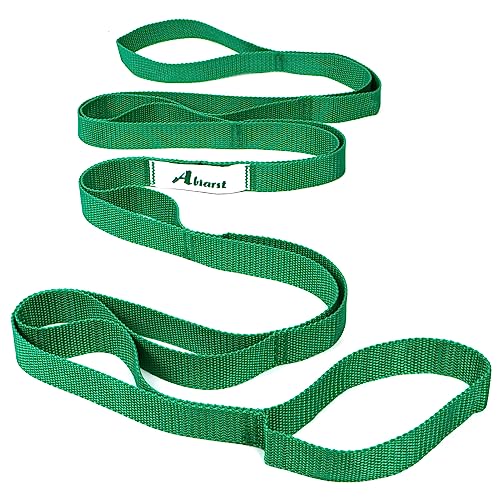
- 75-inch washable fabric strap
- 10 loops for flexible positioning
- Designed for sports, yoga, Pilates, and therapy
Best For: Versatile athletic and studio stretching
Top Choice – OPTP Stretch Out Strap
For athletes seeking stretching straps for athletes, the OPTP Stretch Out Strap is a proven non-elastic option for controlled mobility work. Its woven nylon construction, 10 loops, and included exercise resources support warmups, cooldowns, flexibility training, and recovery routines.
Best For: Athletes, physical therapy users, and anyone wanting a durable, USA-made strap for full-body stretching.
Pros:
- Ten durable loops provide multiple hand and foot positions.
- Non-elastic design offers controlled stretching without snap-back.
- Includes a 40-page exercise booklet and video stretching guide.
- Made in the USA and recommended by physical therapists and athletic trainers.
Cons:
- Non-elastic nylon provides no resistance-assisted stretch.
- One-size design may be less specialized for particular exercises.
With its established design and extensive guidance, this is a strong all-purpose choice for athletes who want dependable stretching and mobility support.
Best Elastic Option – Gaiam Restore Stretch Strap
The Gaiam Restore is one of the more adaptable stretching straps for athletes who prefer gentle resistance during pre- and post-workout mobility. Its medium-stretch band has six numbered loops plus two stabilizing handholds for progressive positioning.
Best For: Athletes and fitness users who want an elastic strap for gradual flexibility work, yoga, and rehabilitation.
Pros:
- Six numbered loops support progressive stretching levels.
- Medium stretch provides a balance of flex and resistance.
- Designed for calves, hamstrings, glutes, hips, triceps, and other areas.
- Downloadable exercise guide helps users get started.
Cons:
- Elastic construction may be less suitable for users seeking a fully non-elastic strap.
- At 39.75 inches, it is shorter than several long-loop alternatives.
This is a practical pick for users who want adjustable resistance and a softer, more assisted approach to stretching.
Best Wide-Grip Design – 12-Loop Physical Therapy Strap
This 8-foot strap is a strong choice among stretching straps for athletes who need numerous positions for mobility and recovery work. Its 12-loop layout, 1.5-inch width, and shock-absorbing SBR construction are designed for controlled stretching and a comfortable grip.
Best For: Athletes and rehabilitation users working on PNF stretching, hamstring flexibility, hip mobility, and post-workout recovery.
Pros:
- Twelve reinforced loops allow fine adjustments in hand and foot placement.
- Wide SBR construction helps reduce digging into the skin.
- Sweat-resistant surface is easy to clean after workouts or therapy sessions.
- Includes an instruction manual and storage bag for guided, portable use.
Cons:
- Its 1.5-inch width may feel bulkier than narrower straps.
- The longer 8-foot length may require more storage space.
With its extra loops and wider grip, this strap suits athletes who want precise positioning and a comfortable tool for structured mobility training.
Best for Controlled Mobility – Trideer Loop Stretching Strap
The Trideer strap is a straightforward option for athletes who want stretching straps for athletes with no elastic recoil. Its woven polypropylene webbing and evenly spaced loops support controlled hamstring, IT band, hip, calf, shoulder, and back mobility work.
Best For: Athletes, home users, and rehabilitation routines requiring a portable, non-elastic strap for daily stretching.
Pros:
- Non-elastic design lets users control tension without snap-back.
- Evenly spaced loops make intensity adjustments simple.
- Reinforced stitching supports repeated daily use.
- Compact 81-inch design is convenient for gym, clinic, or travel use.
Cons:
- It does not provide elastic assistance or resistance.
- Its 1-inch width may offer less grip area than wider straps.
This is a practical everyday strap for users who value stable, predictable tension and a simple design that travels easily.
Cheer & Dance Pick – Cheerleading Flexibility Stunt Strap
For athletes comparing stretching straps for athletes, this static nylon stunt strap is tailored to cheerleading, dance, and gymnastics. Its compact design makes it practical for warm-ups, flexibility work, and travel to practice or competitions.
Best For: Cheerleaders, dancers, and gymnasts working on flexibility and stunt preparation.
Pros:
- Heavy nylon construction with a lightweight 39-inch design.
- Portable enough for a gym bag, backpack, or purse.
- Useful for stretching and warm-ups before athletic activities.
- Includes access to a free digital starter guide.
Cons:
- Its static, single-strap design is more specialized than a multi-loop strap.
- At approximately 39 inches long, it offers less reach than 75-inch options.
This is a focused choice for athletes who want a simple strap for flexibility drills and stunt-oriented training, especially when portability and sport-specific use matter.
Recovery & Mobility Pick – Trideer Stretching Strap with Loops
Among stretching straps for athletes, the Trideer stands out for controlled, non-elastic stretching and mobility work. Its 75-inch length and multiple loops support gradual positioning for legs, hips, back, ankles, and feet.
Best For: Athletes and individuals needing controlled home stretching, mobility practice, or recovery assistance.
Pros:
- Non-elastic construction avoids rebound and sudden give.
- Multiple loops provide adjustable hand and foot positions.
- 75-inch length supports a broad range of lower-body stretches.
- Can also help with leg lifting into a bed or car when used gently.
Cons:
- Non-elastic material is not intended for resistance-band exercises.
- Longer holds may be less comfortable for users with sensitive hands or skin.
Choose this strap if steady holds and repeatable positioning are more important than elastic resistance. The loop layout is particularly practical for gradual mobility work and tracking stretching depth.
Versatile Loop Pick – Oak-Sports Stretching Strap with Loops
This 75-inch non-elastic strap is a versatile option for athletes seeking stretching straps for athletes across yoga, Pilates, dance, gymnastics, and physical therapy. Ten loops provide accessible hand and foot holds for controlled flexibility work.
Best For: Beginners and active users who want one looped strap for stretching, exercise, and physical therapy.
Pros:
- Durable nylon construction offers stability without elastic rebound.
- Ten loops make positioning easier for beginners.
- 75-inch length suits a variety of foot, leg, waist, and hand stretches.
- Backed by a stated 12-month warranty and customer service.
Cons:
- It is a stretching aid rather than an elastic resistance band.
- The strap is 1 inch wide, which may feel less padded during extended holds.
With its generous length, looped layout, and broad activity range, this strap is a practical all-purpose pick. It is especially suitable for users who want straightforward setup and stable positioning.
Safety-Focused Flexibility – 11-Loop Stretching Strap
For athletes comparing stretching straps for athletes, this 55-inch nylon model offers loop-based support for unassisted stretches. Its design is intended to help improve flexibility and range of motion while adding stability during stretching and yoga poses.
Best For: Athletes, dancers, and physical-therapy users seeking a compact loop strap for flexibility work.
Pros:
- Includes 11 loops for varied hand and foot positioning.
- Made from nylon and sized at 55 inches by 1.5 inches.
- Designed to support stability during unassisted stretches and poses.
Cons:
- Only one strap is included.
- The shorter length may provide less reach than longer models.
This is a straightforward option when you want multiple grip points in a relatively compact strap. Its focus on stability makes it useful for controlled stretching, though users who need extra length may prefer a larger model.
Recovery Control – Ultra Stretch Strap with 10 Loops
For athletes evaluating stretching straps for athletes, the KneeSled Ultra provides a long, non-elastic strap with 10 numbered loops. The loop-by-loop layout helps users control stretch levels for hamstrings, calves, quads, and feet during mobility work or recovery.
Best For: Athletes and rehab users working on controlled flexibility, range of motion, or post-surgery exercises.
Pros:
- Ten numbered loops make stretch progression easy to track.
- Its 80-inch length provides substantial reach for leg and foot stretches.
- Suitable for physical therapy, yoga, Pilates, and everyday mobility work.
- Includes an illustrated stretch chart for guided use.
Cons:
- The non-elastic design does not provide stretch-band recoil.
- Its rehabilitation-focused features may be more than casual users need.
This is the most recovery-oriented choice in the group, pairing long reach with numbered positioning and an included guide. It is particularly practical for users who want repeatable stretch levels during rehabilitation or athletic mobility sessions.
Long-Reach Training – 75-Inch Multi-Loop Stretch Strap
When choosing stretching straps for athletes, this 75-inch fabric strap offers extra length and 10 individual loops for flexibility training. Its washable, skin-friendly construction is designed for yoga, Pilates, gymnastics, dance, physical therapy, and daily stretching.
Best For: Athletes and active users who want a long, versatile strap for gym, studio, or home mobility routines.
Pros:
- 75-inch length gives users more room to stretch out.
- Ten loops support multiple exercises and positioning options.
- Durable, washable fabric is described as tight-knit and skin-friendly.
- Suitable for stretching, muscle recovery, and range-of-motion work.
Cons:
- Its 1-inch width is narrower than the first product’s 1.5-inch width.
- Only one strap is included.
This model balances reach and versatility, making it a strong fit for athletes who use one strap across several training disciplines. The longer length is useful for full-leg work, while the 10-loop layout keeps positioning flexible.
How We Picked the Best Stretching Straps for Athletes
We evaluated these stretching straps based on practical features that affect usability during warm-ups, cooldowns, mobility sessions, and rehabilitation exercises. Key considerations included the number and spacing of loops, strap length, width, elasticity, grip comfort, construction, and how easily the strap can be adjusted while lying down or seated.
Looped, non-elastic designs earned attention because they provide consistent leverage without adding unpredictable resistance. Elastic models can be useful for dynamic mobility and gentle strengthening, but they require more control. We also considered whether a strap is suitable for beginners, experienced athletes, or users following a physical therapist’s instructions.
Quick Comparison
| Strap Type | Best For | Main Advantage | Watch For |
|---|---|---|---|
| Multi-loop, non-elastic | General flexibility and PT | Precise hand or foot placement | Less useful for resistance training |
| Elastic resistance strap | Dynamic mobility and strengthening | Progressive tension | Can increase stretch intensity quickly |
| Long flat strap | Yoga and full-body stretching | Versatile positioning | May require manual adjustment |
| Sport-specific flexibility strap | Cheer, dance, and gymnastics | Supports targeted drills | Check length and loop placement carefully |
Key Buying Factors for Stretching Straps for Athletes
Loop Design and Adjustability
Multiple loops make it easier to fine-tune foot, ankle, hand, or shoulder placement. Look for spacing that matches your flexibility level and the exercises you perform most often.
Elasticity and Tension
Choose a non-elastic strap when consistent positioning is the priority. Select an elastic band when you want variable tension, assisted mobility, or light resistance work. Neither design should be used to force a joint beyond a comfortable range.
Length, Width, and Comfort
Taller athletes and users working on hamstrings or shoulders may benefit from a longer strap. A wider strap generally distributes pressure more comfortably, while padded or soft-touch sections can help during extended sessions.
Durability and Portability
Inspect stitching, loop reinforcement, and material quality. A lightweight strap that packs into a gym bag is convenient, but portability should not come at the expense of secure construction.
Who Should Buy Which Stretching Straps for Athletes?
Beginners: Choose a clearly labeled multi-loop strap that makes hand and foot placement simple. Athletes focused on recovery: A non-elastic model offers controlled assistance for hamstrings, calves, hips, and shoulders. Strength and conditioning users: An elastic option may provide more versatility for mobility drills and light resistance exercises. Cheerleaders, dancers, and gymnasts: Look for a long strap with loop positions suited to leg elevation and active flexibility work. Physical therapy users: Follow your clinician’s recommended movements and select a strap that supports gradual, measurable positioning rather than aggressive pulling.
Whichever model you choose, use slow movements, maintain steady breathing, and stop if you feel sharp pain, numbness, or unusual joint pressure.