The Ezona Red Light Therapy Pad review below focuses on real-world comfort, coverage, and ease of use.
If you want a wearable recovery pad for the back, waist, or legs, this is built for convenience.
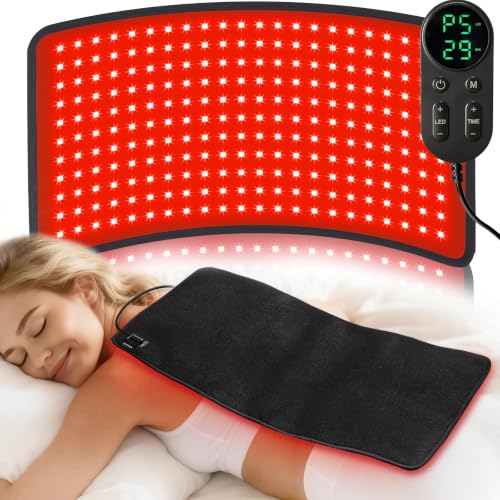
Ezona Therapy Pad Review Summary
If you want a large, wearable red light therapy pad that is easier to live with than a rigid panel, the Ezona Red Light Therapy Pad makes a strong case for itself.
It is best suited to buyers who want broad coverage for the back, waist, shoulders, knees, hands, or feet, plus adjustable modes for different comfort levels and recovery routines.
What stands out most is the combination of a 24 x 12 inch treatment area, 242 LEDs, and dual 660nm red light and 850nm near-infrared light wavelengths.
That mix is aimed at both surface-level comfort and deeper tissue support, which is exactly what most people want from a red light therapy pad for home use.
If you have been asking is Ezona Red Light Therapy Pad worth it, the answer depends on whether you value coverage and flexibility more than pinpoint precision.
Scorecard
| Category | Score | Why It Matters |
|---|---|---|
| Therapy Coverage | 9.0 | The 24 x 12 inch pad is sized to cover a full back, waist, or both legs, making it useful for broad-area treatment rather than spot use. |
| Light Power and Penetration | 9.0 | A 35W high-power design with 242 LEDs and 660nm red plus 850nm near-infrared wavelengths is aimed at deeper tissue targeting and circulation support. |
| Control and Customization | 8.0 | Three modes and five intensity levels give users a good amount of adjustment for different comfort and recovery needs. |
| Ease of Use | 8.0 | The standalone controller, preset timers, and included guidance for common body areas make it straightforward for home use. |
| Fit and Wearability | 7.0 | Flexible material and adjustable straps help it stay in place on multiple body areas, though fit may vary by body size and placement. |
| Session Safety and Convenience | 8.0 | Nine auto-shutoff timer options support hands-off sessions and reduce the need to monitor treatment closely. |
Overall, this is a buyer-friendly recovery pad for people who want a practical daily routine, not a complicated device.
The main tradeoff is that wearable pads do not deliver the same even field as a large stationary panel, so users seeking whole-room style coverage or very precise targeting may want to compare alternatives first.
Key Features and Specifications of Ezona Therapy Pad
The Ezona Red Light Therapy Pad is designed as an at-home body recovery tool, and the spec sheet is well aligned with that mission.
Here is the core data buyers should care about before deciding.
| Spec | Detail |
|---|---|
| Brand | Ezona |
| Product Type | Red light therapy pad |
| Category | Body pain and recovery |
| Dimensions | 24 x 12 inches |
| Power | 35W |
| LED Count | 242 LEDs |
| Wavelengths | 660nm red light and 850nm near-infrared light |
| Modes | Regular (H1), 10Hz Pulse (H2), 40Hz Pulse (H3) |
| Intensity Levels | 5 levels (P1-P5) |
| Timers | 9 preset auto-shutoff timer options |
| Controller | Standalone controller |
| Fit | Flexible pad with adjustable straps |
| Recommended Session | 30 minutes per day |
A few features deserve special attention.
First, the 35W output and 242 LEDs suggest a more serious therapy setup than basic low-LED mats.
Second, the dual-wavelength approach matters because 660nm red light is generally associated with skin-level and superficial tissue support, while 850nm near-infrared is chosen for deeper penetration and recovery-oriented use.
The three operating modes are another important design choice.
Regular mode gives you a straightforward session, while the 10Hz and 40Hz pulse modes are there for users who want a different sensory experience or to vary their routine.
The five intensity levels make it easier to start gently and work upward, which is useful if you are sensitive to light or just beginning red light therapy.
Just as practical are the nine timer settings.
A lot of home wellness devices become annoying when you have to watch the clock, but preset shutoff options make this more of a set-it-and-relax experience.
For buyers comparing the Ezona Red Light Therapy Pad review to simpler heat-focused products, this kind of convenience is a major advantage.
Pros and Cons of Ezona Therapy Pad
If you are looking for a quick Ezona Red Light Therapy Pad pros and cons breakdown, the strengths are easy to see, but there are also a few limitations worth understanding before you buy.
Pros
- Large coverage area works well for the back, waist, and legs instead of just spot treatment.
- High LED count and dual wavelengths make it better suited to recovery-focused use.
- Three modes and five intensity levels improve comfort and personalization.
- Preset timers make sessions easy to manage.
- Wearable design is more convenient than standing in front of a panel.
- Included body-area guidance helps reduce the learning curve for beginners.
Cons
- Not ideal for precise spot treatment if you only want a very small area addressed.
- Clothing can reduce effectiveness, especially thicker or darker fabrics.
- Results depend on consistency; occasional use is unlikely to feel impressive.
- Fit may vary by body shape and where you want to place the pad.
The biggest issue for buyers is not whether the pad has features, but whether those features match the way you plan to use it.
As a broad-body wearable, this is strong.
As a pinpoint recovery tool, it is less compelling.
Who Should Buy Ezona Therapy Pad?
The Ezona Red Light Therapy Pad is a good fit for buyers who want at-home support for muscle comfort, relaxation, and general recovery.
It is especially practical if you plan to use it on larger areas like the lower back or waist, where a small device would feel too limited.
- Buy it if you want a large red light therapy pad for broad coverage.
- Buy it if you like adjustable settings instead of a one-mode device.
- Buy it if you prefer a wearable mat over a rigid panel.
- Buy it if you want a simple daily routine you can follow at home, at the office, or while traveling.
On the other hand, some shoppers should probably skip it.
If your main goal is highly targeted treatment on one small joint or a very specific pain point, a smaller device may be a better fit.
If you mainly want warmth rather than light-based therapy, a heating pad may also be the more efficient choice.
How the 660nm and 850nm LEDs Work
The heart of any red light therapy review is the wavelength mix, and this is where the Ezona Therapy Pad follows the common formula used in many well-regarded home devices.
The 660nm red light is the visible red spectrum often chosen for surface-level support and general wellness routines.
The 850nm near-infrared light is not visible in the same way, but it is the part buyers usually want when they are thinking about deeper penetration and recovery-focused use.
In practical terms, that means the pad is positioned less like a cosmetic gadget and more like a body recovery tool.
That does not guarantee dramatic results on its own, but it does suggest the device is built with the right basic structure for users who want to support relaxation, post-activity comfort, and circulation-oriented routines.
For buyers comparing products, this combination is a key decision point.
A visible-light-only product may feel less versatile, while a near-infrared-only design can be less appealing if you want a broader wellness tool.
The Ezona Red Light Therapy Pad tries to split the difference.
Best Body Areas to Use the Pad On
Because this is a 24 x 12 inch wearable pad, the best results will usually come from areas where broad coverage matters more than exact placement.
Ezona specifically positions it for the back, waist, shoulders, knees, hands, and feet, and that makes sense given the size.
- Lower back and waist: Probably the most natural use case, especially for people who want a wrap-like treatment area.
- Upper back and shoulders: Useful if your tension tends to spread across a wider region.
- Knees: A good option when you want the pad to sit over a joint without needing a rigid shape.
- Legs: The pad is large enough that you can use it in ways that cover both legs or a larger muscle group.
- Hands and feet: Possible, though the pad is clearly more of a broad-area device than a tiny accessory tool.
This is where the wearable format shines.
A rigid panel can be awkward for seated use, and a small belt can feel too narrow.
The Ezona sits in the middle: large enough for real coverage, flexible enough for everyday placement.
Mode and Intensity Settings Explained
The control system is one of the more buyer-friendly parts of this product.
Instead of locking you into a single treatment style, the pad offers three modes and five intensity levels, which gives you a useful amount of flexibility.
- H1 Regular: Best for straightforward sessions when you want the simplest experience.
- H2 10Hz Pulse: A pulsing pattern that may feel more dynamic or comfortable for some users.
- H3 40Hz Pulse: Another pulsed option for people who like a different treatment rhythm.
- P1 to P5: Lower levels are more beginner-friendly; higher levels suit users who want stronger output.
For most buyers, the practical advice is simple: start low, then adjust based on comfort and session length.
That is especially important if you are new to red light therapy or if you are using it on sensitive areas.
The standalone controller helps here because it keeps operation simple and less fussy than app-based systems.
Daily Routine and Session Length Tips
Ezona recommends a 30-minute daily session, which is a good reference point for building consistency.
With red light therapy, routine matters more than chasing a one-off session, so this product is best viewed as a gradual wellness tool rather than a quick fix.
A smart starting approach is to use a lower intensity first, check comfort, and see how your body responds over a few days.
If the pad feels too warm, too bright, or simply awkward to wear, shorten the session or reduce the intensity.
If it feels easy and unobtrusive, you can stick closer to the suggested timing.
One important caution: clothing thickness matters.
The product notes that clothing color and thickness can reduce how much light reaches the body, and that is worth taking seriously.
For best results, use the pad in a way that minimizes blocking layers whenever safe and practical.
From a buyer perspective, this is a device that rewards consistency and patience.
If you want the easiest possible daily wellness habit, the timer settings and wearable design help a lot.
If you are the type who forgets to use devices, a more passive product may be less demanding.
Alternatives to Consider Before You Buy
The Ezona Red Light Therapy Pad is not the only route into home recovery support, so it is smart to compare it with a few common alternatives before committing.
- Red light therapy belt — Better if you want a narrower, more targeted lower-back option.
- Red light therapy panel — Better if you want more distance-based, whole-body style treatment.
- Heating pad — Better if your main goal is warmth and temporary comfort rather than light therapy.
- TENS unit — Better if you want electrical stimulation for pain-relief style routines.
Compared with those options, the Ezona stands out because it is wearable, adjustable, and large enough for broad coverage.
That combination makes it especially appealing for people who want a middle-ground solution instead of a highly specialized device.
Who Should Skip or Use Caution
There are also buyers who should be cautious.
If you want the device for a single small area only, the size may be more than you need.
If you are sensitive to light or have any medical concerns, it is wise to start conservatively and follow the guidance included with the product.
And if you expect the pad to work through thick clothing, that expectation should be adjusted immediately.
People looking for the simplest possible pain-relief experience may also be happier with a heating pad or massage device.
Those who want more clinical-style treatment coverage may prefer a panel.
The Ezona does best when the buyer wants a practical wearable therapy pad with strong general-use flexibility.
Is Ezona Therapy Pad Worth It?
So, is Ezona Red Light Therapy Pad worth it?
For the right buyer, yes.
This is a thoughtfully designed wearable red light therapy pad with a large treatment surface, strong-looking LED output, dual wavelengths, and enough control to make it adaptable for daily use.
Its biggest strengths are coverage, convenience, and customization.
Its biggest drawbacks are the usual ones for this category: it is not ideal for tiny spot treatment, it works best with consistent use, and clothing can interfere with output.
But if you want a home recovery device that is easy to wear and built for broad-body use, the value proposition is solid.
Bottom line: the Ezona Red Light Therapy Pad is a smart buy for users who want a flexible, broad-coverage red light therapy solution for the back, waist, legs, and other common treatment areas. If that is your use case, it belongs on your shortlist.
Final buying advice: choose this pad if you want a wearable, timer-equipped device with multiple modes and a larger treatment area.
Skip it if you need precision targeting or prefer a simple warmth-only product.