Choosing the right wheelchair ramp can make entrances, steps, and thresholds easier to navigate while supporting safer daily mobility. The best option depends on the height of the obstacle, available space, chair type, and whether the ramp will stay in place or travel.
We compare 10 wheelchair ramps for seniors across portable and longer designs, focusing on ramp length, weight capacity, surface traction, construction, setup, and added handrail support.
Best 10 Wheelchair Ramps for Seniors Picks for 2026
Best Overall Value

- 800-pound load capacity
- Foldable with carrying handle
- Fits 4- to 12-inch rises
Best For: Home entries and garage steps
Best for Long Entryways

- 12-foot access length
- Supports up to 600 pounds
- Adjustable support legs included
Best For: Long approaches and mobility scooters
Best with Handrails
Carbon Steel Ramp with Handrails

- Dual integrated handrails
- 770-pound weight capacity
- Fits 3- to 10-inch rises
Best For: Porch entries and stability-focused access
Best Lightweight Pick

- Folds for easy transport
- 800-pound load capacity
- Fits 3- to 9-inch rises
Best For: Low steps, doorways, and travel
Best Heavy-Duty Choice
Carbon Steel Ramp with Handrails

- Dual handrails and reflective strips
- Fits 8- to 24-inch rises
- 850-pound carbon steel capacity
Best For: Taller home steps and users who value added hand support
Best Compact Threshold Pick

- Lightweight 10.9-pound folding design
- Fits 2- to 6-inch height adjustments
- 800-pound capacity with carrying handle
Best For: Low thresholds and temporary access where portability is important
Best Mid-Length Option
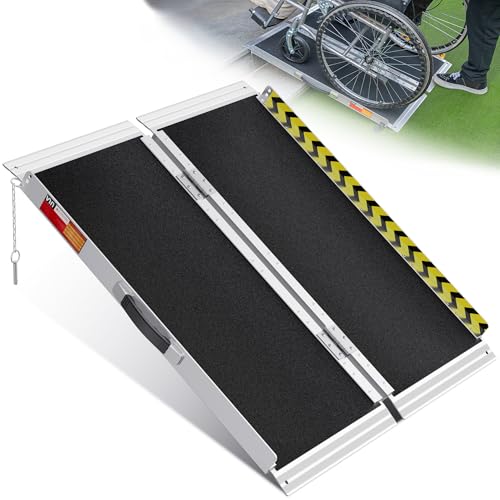
- Fits 3- to 9-inch step heights
- Foldable 18.3-pound aluminum design
- Double non-skid surface and safety reflectors
Best For: Portable access over home steps, doorways, and garage thresholds
Best Compact Threshold Ramp

- 800-pound capacity with a lightweight 11.9-pound design
- Double non-slip surface with raised side baffles
- Folds for carrying and compact storage
Best For: Low 2- to 4-inch thresholds and portable everyday access
Best Long Portable Ramp
6-Foot Aluminum Wheelchair Ramp

- 800-pound capacity for 6- to 18-inch steps
- Seamless hinge design and double non-skid surface
- Folds for transport but weighs 35.5 pounds
Best For: Taller steps, garage entries, and loading transitions
Best Handrail Threshold Ramp

- Dual handrails support steadier walking and transfers
- Adjustable tail fits thresholds under 10 inches
- 440-pound carbon-steel platform with drainage
Best For: Low thresholds where seniors need handrail assistance
Best Overall Value – Portable 4-Foot Aluminum Ramp
For shoppers comparing wheelchair ramps for seniors, this 4-foot aluminum model offers a practical balance of portability, width, and capacity for home steps. It is designed for rises from 4 to 12 inches, so measure the step height before ordering.
Best For: Home entries, garage steps, and users who need a foldable ramp with an 800-pound capacity.
Pros:
- Supports up to 800 pounds.
- Foldable aluminum construction with a comfortable carrying handle.
- Non-skid surface, side baffles, reflective strips, and transition plates add safety features.
- Can be secured to a wooden platform with the included screws.
Cons:
- At 23.8 pounds, it may be less convenient to carry than shorter ramps.
- Its recommended 4- to 12-inch rise range requires careful measurement.
- The ramp may sink during use before rebounding, according to the product notes.
With its wide 29.2-inch profile and high weight rating, this is a versatile choice for home access, provided the step height and portability requirements match.
Best for Long Entryways – 12-Foot Aluminum Ramp
This 12-foot ramp is a strong option among wheelchair ramps for seniors when a longer approach is needed for steps, vehicles, or loading areas. Its extended length can help accommodate access points that are not suitable for a short portable ramp.
Best For: Long approaches, power chairs, mobility scooters, vehicles, and users who want adjustable support legs.
Pros:
- 12-foot length and 28.7-inch width are designed to fit wheelchairs, power chairs, and mobility scooters.
- Breaks into two pieces and includes carrying handles for storage and transport.
- Supports up to 600 pounds with a composite aluminum design.
- Includes anti-slip rubber, reflective warning strips, security pins, and adjustable support legs.
Cons:
- At 93.3 pounds, it is substantially heavier than the shorter ramps in this selection.
- Its long size may require more storage space and setup planning.
- Buyers need to select the correct ramp size after reviewing the manufacturer’s guidance.
This is the most suitable choice here for extended rises and heavier mobility equipment, but its weight and two-piece design make it less convenient for quick, frequent repositioning.
Best with Handrails – Carbon Steel Ramp with Handrails
For seniors or caregivers who value added hand support, this carbon steel model stands out among wheelchair ramps for seniors. It is intended for a 3- to 10-inch rise and combines dual handrails with a high-traction surface.
Best For: Home steps and porch entries where users or caregivers want integrated handrails and a heavy-duty frame.
Pros:
- Dual ergonomic handrails provide additional grip and stability.
- Supports up to 770 pounds and is made from high-strength carbon steel.
- High-traction coating is designed to provide grip in wet or icy conditions.
- Folding, disassembly, security bolts, and labeled hardware support installation and storage.
Cons:
- At 40 pounds, it is heavier than the compact aluminum ramps.
- The 3- to 10-inch rise range limits use outside those measurements.
- Assembly and anchoring are required rather than offering a no-setup design.
The handrails make this a compelling option for stability-focused access, while the carbon steel construction favors durability over lightweight portability.
Best Lightweight Pick – Portable 3-Foot Aluminum Ramp
This 3-foot aluminum ramp is a convenient choice for wheelchair ramps for seniors when the entry has a relatively low rise and easy transport matters. It is designed for 3- to 9-inch rises and folds in half for storage or travel.
Best For: Doorways, low steps, vehicles, and users seeking a portable ramp for wheelchairs, scooters, walkers, or strollers.
Pros:
- Lightweight design weighs about 17 to 18.7 pounds and folds for transport.
- Supports up to 800 pounds.
- Non-slip surface, rear anti-slip mat, side baffles, and reflective warning strips support safer use.
- Requires no setup and includes a handle for carrying.
Cons:
- It is intended for rises of only 3 to 9 inches.
- Its 3-foot length may not suit taller steps or longer approaches.
- Users must measure the vertical rise before purchase.
For low door thresholds and steps, this ramp offers one of the more convenient combinations of low weight, folding storage, and high load capacity in the group.
Best Heavy-Duty Choice – Carbon Steel Ramp with Handrails
For seniors comparing wheelchair ramps for seniors, this carbon steel model is designed for taller home steps, porches, garages, and entryways. Its dual handrails, reflective strips, textured surface, and high weight capacity emphasize stability for repeated home access.
Best For: Homeowners needing a sturdy, handrail-equipped ramp for rises from 8 to 24 inches.
Pros:
- Dual handrails provide added support for seniors, wheelchair users, and caregivers.
- Adjustable feet and pre-drilled holes accommodate 8- to 24-inch rises.
- Carbon steel construction supports up to 850 pounds.
- Folds for storage and includes reflective strips for low-light visibility.
Cons:
- At 110 pounds, it is substantially heavier than the aluminum alternatives.
- Its larger 96-inch length and handrails require more storage space.
This is the most substantial option in the group, especially where hand support and a higher rise range matter more than portability. Confirm the step height and available space before installation.
Best Compact Threshold Pick – 2-Foot Folding Aluminum Ramp
This 2-foot aluminum ramp is a practical option for wheelchair ramps for seniors at low thresholds and home steps. It folds to a compact size, includes a carrying handle, and is intended for height adjustments from 2 to 6 inches, with wheelchair use recommended for steps no higher than 4 inches.
Best For: Low thresholds, short steps, and temporary indoor or outdoor access where easy carrying matters.
Pros:
- Lightweight 10.9-pound design folds for transport and storage.
- Textured aluminum surface, baffles, and reflective strips support safer movement.
- Supports up to 800 pounds and works with scooters, power wheelchairs, and walkers.
- Corrosion-resistant stainless steel hinge is suited to indoor and outdoor use.
Cons:
- It is limited to short rises; wheelchair use is recommended for steps no higher than 4 inches.
- Wheelbases over 27 inches will not work with this ramp.
- Side walls and extension plates may interfere with doors or sliding-door tracks.
Choose this model when portability and a compact footprint are priorities. Carefully measure the step, wheelbase, and door clearance before purchase, and keep the front extension plate flush with the ground.
Best Mid-Length Option – 3-Foot Non-Slip Aluminum Ramp
For seniors seeking wheelchair ramps for seniors that cover somewhat higher steps, this 3-foot aluminum ramp is designed for 3- to 9-inch rises. Its folded construction, carrying handle, double non-skid surface, and transition plates make it suitable for home doors, garage steps, curbs, and other temporary access points.
Best For: Home steps and doorways requiring a portable ramp for 3- to 9-inch rises.
Pros:
- Designed for a broader 3- to 9-inch step-height range than the 2-foot model.
- Foldable aluminum construction weighs 18.3 pounds for easier storage and transport.
- Folded surface and non-skid layer provide double traction.
- Baffles, reflective warning stickers, and transition plates support safer transitions.
Cons:
- The ramp may sink slightly during use before rebounding.
- Its 800-pound capacity should not be exceeded.
- At 36 inches long and 18.3 pounds, it is less compact than the 2-foot option.
This model offers a useful middle ground between short threshold ramps and heavier permanent-style access solutions. Verify the step height, available landing space, and the ramp’s fit for the intended mobility equipment.
Best Compact Threshold Ramp – 2-Foot VEVOR Folding Ramp
For seniors who need wheelchair ramps for seniors at low door or garage steps, this compact VEVOR model is designed for 2- to 4-inch rises. Its lightweight folding aluminum construction makes it convenient for occasional indoor or outdoor use.
Best For: Low thresholds, doorways, garage steps, and users who prioritize portability and easy storage.
Pros:
- Supports up to 800 pounds while weighing about 11.9 pounds.
- Grooved aluminum and a non-slip coating provide two layers of surface traction.
- Raised side baffles, reflective strips, and transition plates add visibility and stability.
- Folds with a carrying handle for storage in a wall space or car trunk.
Cons:
- Designed only for step heights from 2 to 4 inches.
- Its short length is not intended for taller steps or extended inclines.
This ramp is a practical choice when the main access problem is a small threshold rather than a flight of steps. Confirm the rise and available door clearance before purchasing, and place both transition plates flush with the surfaces.
Best Long Portable Ramp – 6-Foot Aluminum Wheelchair Ramp
This 6-foot aluminum model is one of the more versatile wheelchair ramps for seniors who need to bridge taller home steps, doorways, or loading areas. It is rated for step heights from 6 to 18 inches and folds for transport, though its 35.5-pound weight is worth considering.
Best For: Taller steps, home or garage entries, and users who need a longer folding ramp with an 800-pound capacity.
Pros:
- Supports up to 800 pounds and accommodates stated step heights of 6 to 18 inches.
- Seamless center hinges help reduce tripping concerns during passage.
- Folded aluminum construction and an upgraded handle support transport and storage.
- Double non-skid protection, side baffles, reflective stickers, and transition plates improve usability.
Cons:
- At 35.5 pounds, it is considerably heavier than the 2-foot option.
- Its 6-foot length requires more setup and storage space.
Choose this ramp when a short threshold ramp would create too steep an incline. Verify the step height, landing space, and carrying requirements before buying, especially if one person will handle setup.
Best Handrail Threshold Ramp – VEVOR Ramp with Dual Rails
For wheelchair ramps for seniors that also need walking support, this VEVOR threshold ramp adds dual handrails to a sturdy carbon-steel platform. Its adjustable tail helps it sit flush with the ground, making it suitable for low thresholds and assisted entry transitions.
Best For: Seniors walking with support, caregiver-assisted crossings, wheelchairs, walkers, and scooters at low thresholds.
Pros:
- Dual handrails provide lateral support for independent or assisted walking.
- Adjustable tail helps accommodate thresholds under 10 inches.
- Carbon-steel construction supports up to 440 pounds.
- Open-grid flooring drains water quickly and has an anti-rust coating.
Cons:
- Wheelchair use is suggested only for steps below 6 inches.
- At 43.7 pounds, it is heavier than the folding aluminum ramps.
- Its handrails and 44.9-by-33.5-inch footprint require more setup space.
This is a strong fit when hand support matters as much as ramp access. The adjustable tail and open-grid surface add practical outdoor flexibility, but measure the threshold and surrounding space carefully before installation.
How We Picked These Wheelchair Ramps for Seniors
We evaluated the selected ramps against the factors that matter most for home accessibility: usable length, stated weight capacity, surface traction, material, portability, threshold compatibility, and handrail availability. We also considered whether each design is better suited to a doorway, one or more steps, a vehicle, or a semi-permanent entrance.
Product specifications should always be checked against the latest manufacturer information. Confirm the ramp’s dimensions, weight rating, folded size, and installation requirements before ordering.
Quick Comparison
| Ramp type | Best suited for | Key advantage | Watch for |
|---|---|---|---|
| 2-foot portable ramp | Low thresholds and small lips | Compact and easy to store | Limited rise |
| 3- to 4-foot ramp | One low step or porch edge | Balances reach and portability | May require careful positioning |
| 6- to 12-foot ramp | Higher steps and gradual access | Lower incline potential | Needs more storage and floor space |
| Ramp with handrails | Users who need extra balance support | Added stability during ascent and descent | Heavier and less compact |
Key Buying Factors for Wheelchair Ramps for Seniors
Measure the Rise First
Measure from the ground or landing surface to the top of the threshold or step. A longer ramp generally creates a gentler incline, but it also requires more room. Do not choose by ramp length alone; confirm that the intended rise is appropriate for the user and mobility device.
Check Capacity and Usable Width
Include the combined weight of the wheelchair or scooter, the user, and any equipment. Select a ramp with a meaningful safety margin above that total. Also verify the usable riding width, especially for wider wheelchairs and mobility scooters.
Prioritize Traction and Stability
Non-slip surfaces are important, particularly at outdoor entrances or in damp conditions. Look for secure contact with the ground, a stable top transition, raised edges where appropriate, and a design that will not shift during use. Portable ramps may need additional securing or positioning on uneven surfaces.
Match the Design to Everyday Use
Aluminum ramps are typically easier to carry, while longer or handrail-equipped models may provide better access but require more setup. Check folded dimensions, carrying handles, storage space, and whether the ramp can be handled safely by the caregiver who will install it.
Who Should Buy Which Wheelchair Ramps for Seniors?
- For low door thresholds: Choose a compact 2-foot threshold-style ramp when only a small vertical lip needs to be cleared.
- For a single low step: A 3- or 4-foot portable model can offer a practical balance of incline and portability.
- For taller steps or a gradual approach: Consider a 6- or 12-foot ramp if you have sufficient clear space and need a less abrupt incline.
- For users needing balance assistance: A handrail-equipped carbon steel or aluminum model may be preferable, provided its width, rise range, and installation footprint fit the entrance.
- For frequent travel: Favor a lightweight folding ramp with a manageable folded size, but confirm its capacity and traction before relying on it for repeated use.
Before use, test the ramp at the intended entrance, confirm that both ends sit securely, and follow the manufacturer’s guidance for rise, loading, maintenance, and weather exposure.